
One-way vision vinyl has become a mainstream material for glass-based advertising displays, earning widespread market recognition for its three core advantages: one-way visibility, effective advertising display, and sun-shading and heat-insulating properties. Its unique characteristics make it widely applicable in various settings—such as buses, subway trains, shopping malls, storefront windows, and glass curtain walls—where it delivers exceptionally striking advertising results.
I. Why is One Way Vision So Popular?
- Balances Advertising Display with Privacy Protection
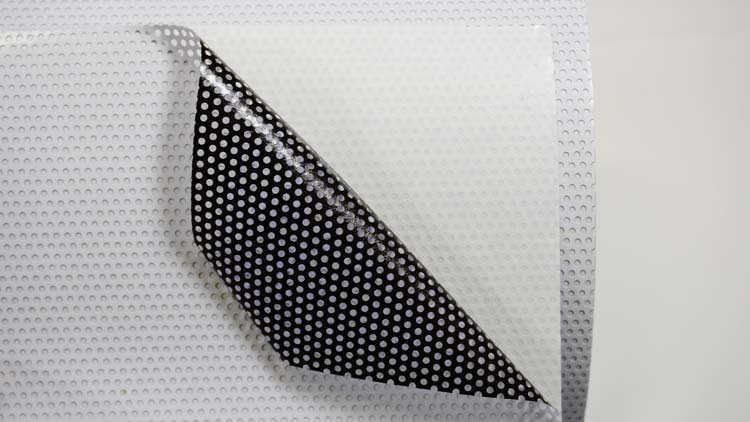
Once printed, the material presents a complete, exquisite advertising image when viewed from the outside, while allowing for a clear, unobstructed view of the external environment from the inside. The product utilizes a perforated structure combined with light differential principles to achieve its one-way vision effect; during the day, it effectively safeguards indoor privacy without compromising the external display of the brand image.
- Light-Permeable and Sun-Shading: Practical and Comfortable
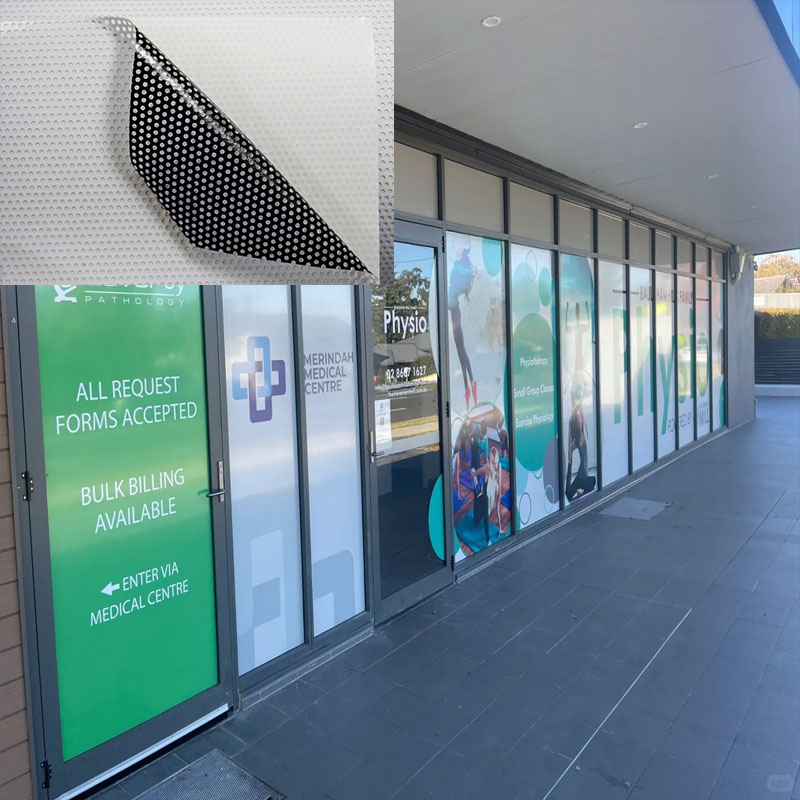
With a light transmission rate of approximately 35%–40%, it effectively blocks harsh glare and UV rays while ensuring adequate natural lighting indoors. Compared to standard solar films, it offers greater transparency and a superior field of view, striking an ideal balance between practicality and comfort.
- Instantly Transforms Glass into High-Value Advertising Space
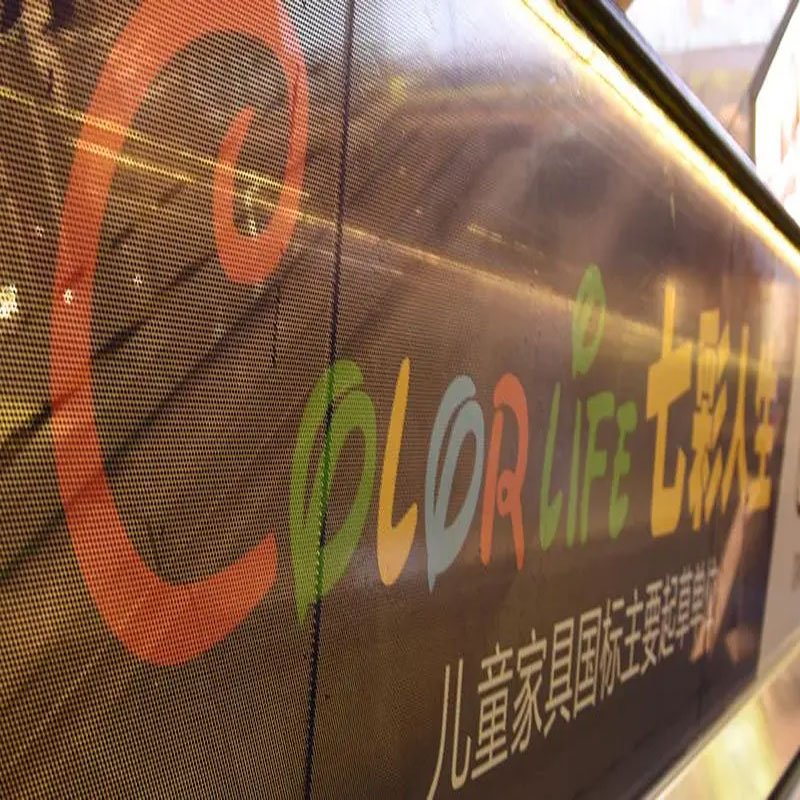
In densely populated urban areas, every pane of glass represents a potential advertising medium.
One-way vision vinyl features vibrant colors, strong adhesion, and excellent outdoor weather resistance; it significantly maximizes space utilization and generates direct commercial value for clients.
- Convenient and Efficient Installation and Removal
Compatible with high-resolution inkjet printers, it supports a variety of ink types—including eco-solvent, solvent, and UV inks. Once printed, it can be applied directly to glass surfaces, eliminating the need for constructing separate billboards. It utilizes a removable adhesive backing that leaves no residue upon removal and causes no damage to the glass or building surfaces, thereby vastly improving the efficiency of advertising installation and replacement.
- Low Cost and High Cost-Effectiveness
Compared to traditional advertising materials—such as illuminated signage, light boxes, and PP synthetic paper—Perforated Vinyl offers lower material and installation costs, making it an ideal choice for large-scale glass advertising applications.
II. Primary Disadvantages
- Suboptimal Appearance at Close Range
Due to its perforated structure, the printed image may exhibit a slight grainy texture when viewed from a very close distance, resulting in limited clarity; it is therefore best suited for viewing from a distance of 3 meters or more.
- Limited Outdoor Lifespan
Prolonged exposure to direct sunlight may lead to premature aging, edge curling, and material shrinkage. Standard models typically have a lifespan of approximately 3 to 6 months, while high-quality versions can last for 1 to 2 years; however, for outdoor applications, periodic replacement is required.
- Loss of Nighttime Privacy
When interior lights are turned on, the lighting conditions reverse; the interior becomes clearly visible from the outside, and the one-way privacy function is lost.
- Demanding Installation and Cleaning Requirements
When applied over large surface areas, the material is prone to developing air bubbles and wrinkles, thereby requiring a certain level of technical expertise for proper installation.
Its micro-perforated structure tends to accumulate dust easily, making routine cleaning relatively inconvenient.
- Limitations in Certain Applications
One Way Vision Window Sticker It is unsuitable for close-range displays where extremely high image clarity is a critical requirement.
Due to traffic regulations, its use on the front windshields of vehicles is generally prohibited.